Mesquite, NV · Garage Door Service
Torsion springs and opener gears in Mesquite's mostly 2000s-built homes wear out early in this heat. We diagnose the actual failure and fix it on-site, same area, same day when we can.
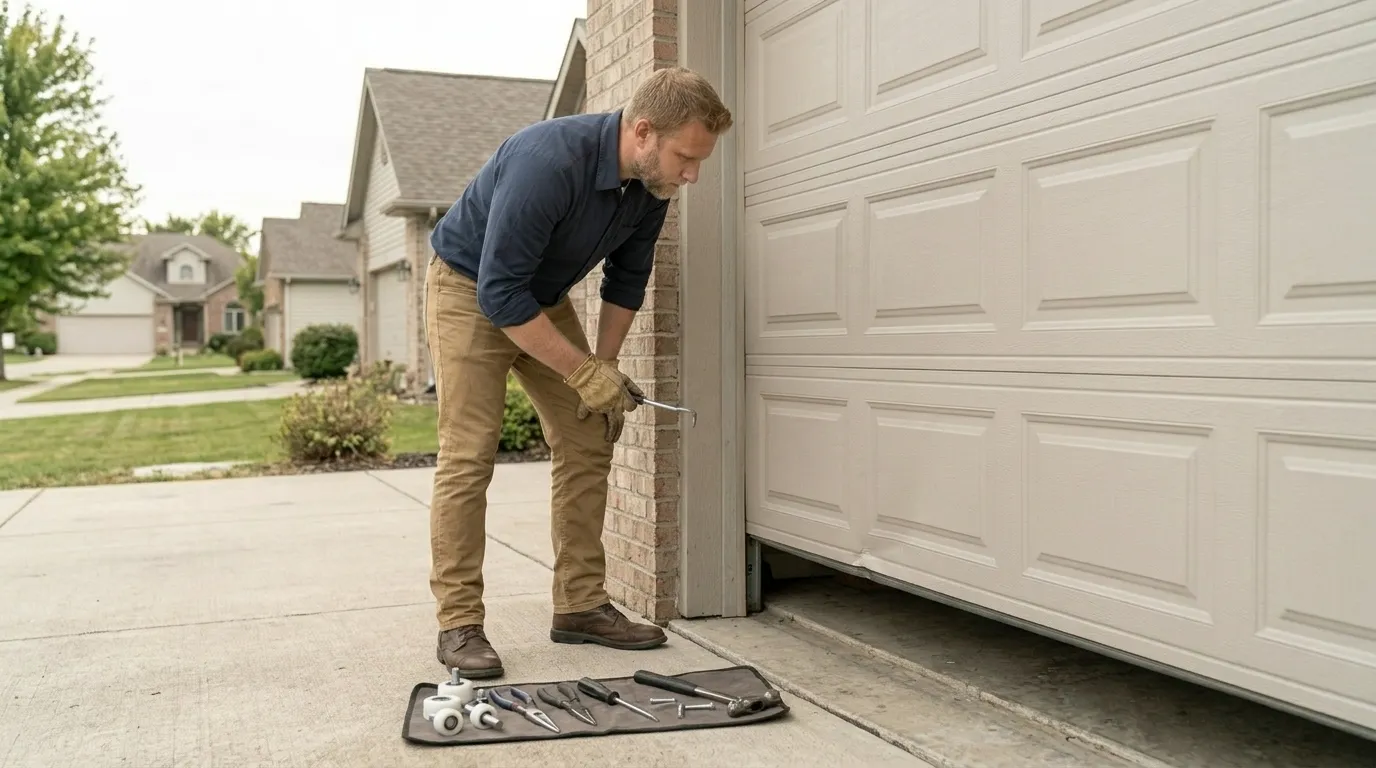
We start by watching the door move, not just listening to what you tell us on the phone. A door that hangs unevenly on one side almost always means a broken torsion spring, and we test cable tension and drum position before we touch anything. If the spring has gone, we replace it with one matched to the actual weight of your door and cycle it under load to check balance, not just to see if it opens.
If the complaint is a grinding or straining opener instead, we check the drive gear and the circuit board separately, because heat-damaged plastic gears fail differently than a burned-out board. In the roughly 230 households across this service area, most owner-occupied houses run a single opener daily, so wear shows up as slow response before it shows up as total failure.
One honest limit: if the opener logic board is fried and the unit is older than what current openers use for wiring, we don't hunt for a matching replacement board. Past that point, swapping the whole opener is the faster and cheaper fix, and we'll say so instead of billing you for a part hunt that won't pay off.
Call and describe what the door is doing - grinding, refusing to open, slamming down, or just moving slower than it used to. That description tells us what to bring on the truck before we knock on your door, which cuts down on a second trip for a part we didn't know we needed.
Most calls in this area come from owners in houses built in the 2000s, so we already have a good sense of what torsion spring sizes and opener models are common here. That doesn't mean we skip the diagnosis - it means the diagnosis goes faster.
We work the Mesquite service area, including out toward Bunkerville four miles off. If your address is outside where we run trucks regularly, tell us up front and we'll say plainly whether it makes sense for us to come out.
The two calls we get most: a door that won't budge past a few inches, and a door that slams down hard on the last foot of travel. The first is almost always a snapped torsion spring - the door goes dead weight and the opener isn't built to lift that alone, so it either stalls or trips its safety reversal. The second is usually a spring that's still intact but weakened, so it can lift the door partway before losing the fight with gravity near the bottom.
A grinding opener with no spring problem is a different animal - that's the gear set inside the unit wearing down, often after the plastic has spent a few summers in a hot garage. You'll hear it before you see it: a rattling, straining sound instead of a smooth motor hum.
Less common but real: tracks that bind or stick only in the afternoon heat, when metal expansion tightens tolerances that were fine that morning. If your door only misbehaves once the garage has baked all day, that's worth mentioning when you call.
Most of the housing stock in this service area went up in the 2000s, which puts a lot of original torsion springs and openers right at the age where metal fatigue and gear wear start showing up together. Springs are rated for a number of open-close cycles, not a number of years, but in practice that cycle count runs out right around the two-decade mark in houses that use the garage door daily - which describes most of the 186 owner-occupied houses we see calls from.
Mesquite sits in a climate band the federal data marks as severe heat, and heat is not neutral to any of this. It softens the lubricant packed into spring coils, so springs run drier and corrode faster from the inside. It's also hard on the injection-molded plastic gears inside openers, which get brittle faster in a garage that regularly sits well above room temperature.
Bunkerville, four miles out, sits in the same subdivisions-and-climate combination, so the pattern there looks the same: 2000s-era builds, same heat load, same spring and gear failures showing up on the same rough timeline.
Torsion springs fail from fatigue, not from one bad day. They're rated for a set number of open-close cycles, and heat speeds up the coil lubricant breaking down inside them. In houses built in the 2000s that get daily use, that cycle count and the twenty-year mark tend to line up, so the spring finally gives out on what feels like an ordinary morning.
Depends on what failed. A worn gear kit inside the unit is usually a straightforward repair. A fried logic board on an older opener is a different call - if we can't get a matching board, replacing the whole unit is usually faster and less expensive than us chasing down discontinued parts.
Yes, Bunkerville is about four miles from our Mesquite service area and we run calls out there. The housing stock and heat exposure are similar to Mesquite, so the same spring and opener issues we see here show up there too.
Metal tracks expand slightly in heat, and if the tolerances were already tight, that extra expansion is enough to make a door bind or drag by late afternoon that ran fine that morning. It's a real symptom worth mentioning when you call, since it points us toward track alignment rather than the spring or opener.
Call now or request a free quote - same-day service on most repairs, upfront written pricing.