Mesquite, NV · Garage Door Service
Opener installs in Bunkerville, NV, sized for 1990s-era homes and severe desert heat. Serving all 230 households from our Mesquite shop, four miles away.
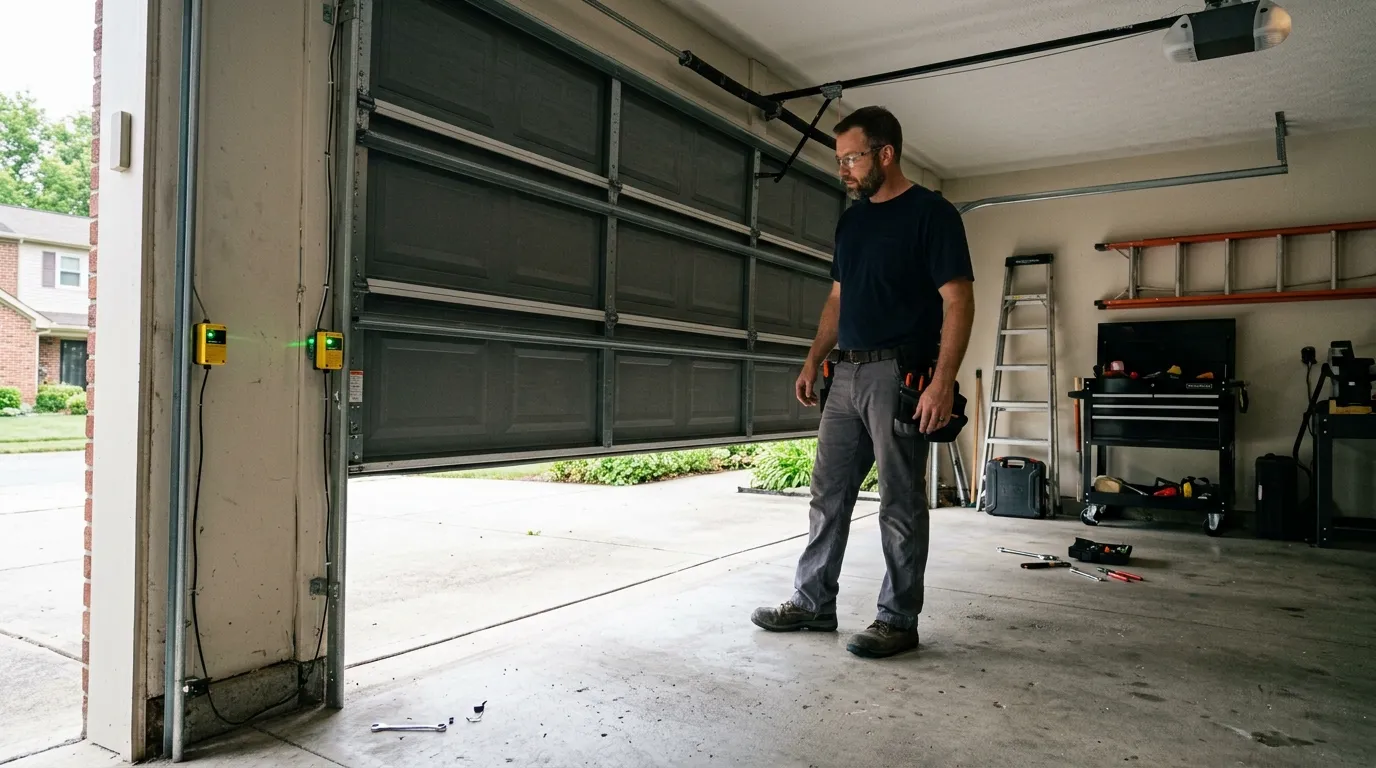
Bunkerville sits four miles from our shop in Mesquite, close enough that a call here doesn't cost you a half-day wait for a truck to cross town. That's the easy part. The harder part is what's actually hanging in the garage when we get there.
Most of the 230 households out here went up around 1991, which means the openers still working in a lot of these garages are pushing thirty years old. Chain-drive units from that era were never built with today's heat load or today's electronics in mind. The motor housing, the gear set, the logic board - all of it was designed for a shorter service life than what these owners have actually asked of it.
The other complication is wiring. A lot of 1991-built garages have a single outlet on the ceiling joist meant for a light, not a motor that draws real current. When we swap an opener, we're often also checking whether that outlet and its circuit can handle a new unit safely, which isn't always a five-minute answer.
We don't guess on this. If the wiring needs work beyond the opener swap itself, we tell you before we start, not after the panel's already open.
We're not going to promise a number here we can't back up, but the drive itself isn't the bottleneck - four miles from Mesquite is a short run, and it's the same run every time, not a cross-valley trip that varies by traffic.
What varies is the house. A straight swap, where the existing mount, rail, and wiring are all sound, is a different job than one where the 1991-era bracket needs replacing or the circuit needs updating before the new motor goes in. We size up the mount and the power supply before we quote the install, because those are the two things that turn a simple job into a longer one.
If your garage still has the original opener from when the house was built, budget for the second scenario. Thirty-year-old hardware rarely gives up its mounting points without a fight, and we'd rather tell you that up front than surprise you with it halfway through the job.
The truck that comes out to Bunkerville carries openers rated for sustained desert heat, not the base models built for milder climates. That distinction matters here - this corner of the valley sees some of the harder heat load in the region, and a motor with an undersized capacitor or a plastic gear set not rated for high ambient temperature burns out faster than the box says it should.
Given the median household income here runs $149,327, we default to stocking openers with battery backup and phone-app control rather than treating them as an upcharge. Battery backup matters more in a climate where the grid gets stressed hardest exactly when your AC and everything else in the house is drawing the most power.
We don't stock every opener brand made. What's on the truck is a working range - chain drive for straightforward jobs, belt drive for owners who want quiet, and the battery-backup models - not a full catalog. If you want a specific brand we don't carry, we'll tell you plainly instead of pretending we've got it.
An opener kit from a hardware store looks like a weekend project, and for some houses it is. For a lot of the garages out here, it isn't, and the reason comes back to the wiring and mounting issues that go with 1991-era construction.
If your outlet isn't rated for the draw, or the header above the door isn't square with the new bracket points, a DIY install either fails inspection-level scrutiny or works today and fails in six months when the heat's had a chance to work on a bad connection. Neither is a good outcome for the cost of the parts.
Where DIY does make sense: swapping a remote, replacing a keypad, or reprogramming a rolling code on an opener you already know is sound. Those are low-risk jobs. Pulling the whole unit and rewiring the mount is not, and that's the honest line we'd draw for a homeowner asking us straight.
The opener that's slow to close, especially in the afternoon heat, is usually not a coincidence - it's a motor working harder than it should because a capacitor or gear set has already started to go. That symptom shows up more here than in milder climates, because the heat load pushes marginal parts over the edge faster.
A remote that works some days and not others, especially as the day heats up, points to the same thing: a logic board or receiver that's degrading under thermal stress, not a dead battery. Grinding on the way up usually means the gear set inside the housing has stripped, which on a unit this old isn't worth repairing piece by piece.
If the door reverses on its own partway down, that's a separate issue tied to the travel limits or the safety sensors, not the opener motor itself, and it's worth a look before you assume the whole unit needs replacing.
For most of these 1991-era garages, the fix is a full swap: out with the original chain-drive unit, in with a heat-rated model matched to the bracket and header we find on site. We check the mounting points first - original hardware from that build era sometimes needs new lag bolts or a reinforced header brace before a heavier belt-drive unit goes up safely.
We test the travel limits and force settings once it's mounted, not just at install but with the door run a few times, since heat-expanded tracks can throw off a setting that looked fine on a cool morning. Battery backup units get their battery tested under load, not just plugged in and assumed good.
With 186 owner-occupied houses in the area, most of what we see is a homeowner replacing an opener they've had since they bought the place - not a landlord doing turnover work between tenants. That changes the conversation some: we're usually explaining what's changed in opener tech over three decades, not just swapping a part.
It's about four miles from our shop in Mesquite. We don't add a separate trip charge for a distance that short - it's built into how we price the job, not tacked on after.
Sometimes a remote or sensor issue can be fixed on an older unit, but a motor or gear set that age is usually past the point where parts repair makes financial sense. We'll tell you honestly which category yours falls into before we recommend a full swap.
Yes. The trucks carry openers rated for sustained high ambient temperature rather than base models built for milder climates, since heat load is one of the bigger stress factors on a motor and capacitor in this part of the valley.
Sometimes. A lot of garages built around 1991 have an outlet that wasn't sized for a modern opener's draw. We check that as part of the install and tell you before starting if the circuit needs attention beyond the opener swap itself.
Call now or request a free quote - same-day service on most repairs, upfront written pricing.