Mesquite, NV · Garage Door Service
Bunkerville homes went up mostly around 1991, meaning steel doors built for a different desert than today's. See what a new install actually involves here.
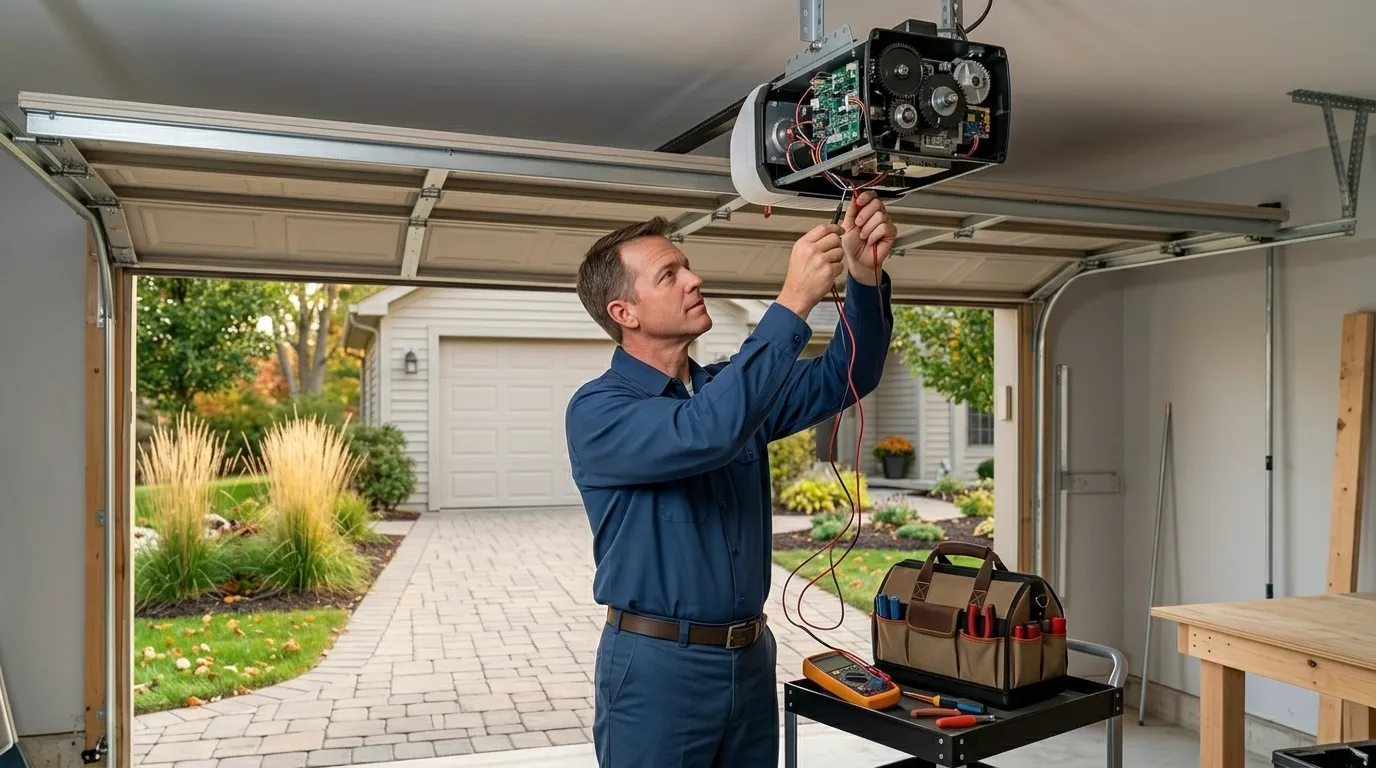
Most of the doors we pull off in Bunkerville are steel sectional units that went in when the house did, and the typical house here dates to around 1991. That's a single-layer steel door, no foam core, on a torsion spring sized for a lighter panel than what's sold today. Thirty-plus years of that panel sitting in direct desert sun does what you'd expect: the finish chalks, the bottom panel warps a hair out of square, and the steel itself gets brittle at the seams. Swapping in a modern door isn't a straight bolt-in. Newer doors run heavier with insulation, so the springs, the drums, and sometimes the track have to be matched up new rather than reused. With only 230 households in the service area and 186 of those owner-occupied houses, most of what we see out here is this same generation of door showing the same wear pattern, not a mix of eras. That consistency actually makes the job easier to scope once we're on site, but it means almost nobody here is dealing with a 'just replace the opener' fix - the door itself is usually the actual problem.
Bunkerville sits about 4 miles from our shop in Mesquite, so travel isn't the bottleneck - a straightforward single-door swap on a residential opening is usually a half-day job once we're there, start to finish, including removing the old panels and torsion hardware. Double doors or anything with a warped jamb from age take longer, since we're squaring an opening that's been sitting slightly out of true for over thirty years. We don't quote a fixed hour window for arrival because we're not staged in Bunkerville itself; we come out from Mesquite for each job, and we'll give you a real time when we schedule, not a marketing number.
For a door of the 1991 vintage that's common here, the parts that matter are the torsion springs sized to the older, lighter panel weight, standard-drum hardware, and steel track sections - none of it exotic, all of it stuff a garage door truck carries as a matter of course. Where it gets slower is if you want to upgrade to a modern insulated door rather than replace like-for-like: those come in specific widths and R-values, and depending on the model, that's an order-in item rather than something riding on the truck. We'll tell you upfront at the quote stage whether your new door is a same-day swap or a scheduled delivery.
We'll say this plainly: replacing the door itself is not a good DIY project, even for a homeowner who's handy. A torsion spring under load can put someone in the hospital, and squaring a new door into an opening that's shifted slightly over three decades takes more than a level and a Saturday. Where you can save money is on cosmetic stuff - repainting, replacing weatherstrip, swapping a keypad. The structural side, springs, cables, track alignment, is where we draw the line and tell people to call rather than guess.
The complaint we hear most from Bunkerville is a door that's started binding partway up, or one side visibly lower than the other when it's closed. On a door from around 1991, that's almost always the panel itself warping from decades of direct heat exposure, not the opener losing strength. Given how severe the summer heat runs here, steel expands and contracts enough over the years to throw a panel out of square at the seams, and once that happens the rollers start fighting the track instead of riding it. Homeowners sometimes chase this by replacing the opener first, which doesn't fix anything if the door itself is the part that's bent.
Once we're out from Mesquite and have eyes on the opening, we measure for a new door sized to your actual jamb rather than assuming it matches the original spec sheet, since three decades of heat cycling can shift an opening slightly out of true. Given the income level typical of this area, a fair number of homeowners here choose an insulated steel door over a bare single-layer replacement, since it holds up better against the same heat that warped the original. We size new torsion springs to the new door's actual weight, not the old one's, set the track plumb, and test the balance before we call it done.
No. We're based in Mesquite, about 4 miles away, and we drive out for every Bunkerville job. There's no local branch or depot here, just a truck coming from Mesquite with the parts and hardware needed for the job.
Doors built around 1991 are usually single-layer steel with no foam core, and the torsion springs were sized for that lighter weight. If you're upgrading to an insulated door, the spring, drum, and sometimes the track all need resizing rather than direct swapping.
Depends on the panel. If it's just a bent section or a cracked seam from heat, sometimes a panel swap works. If the whole door has warped out of square from years of sun, replacement is usually the better money, since a repaired warped panel tends to bind again.
Call now or request a free quote - same-day service on most repairs, upfront written pricing.