Mesquite, NV · Garage Door Service
Bunkerville homes date mostly to 1991, four miles from our Mesquite shop, and severe heat ages spring grease fast. We run maintenance calls out here.
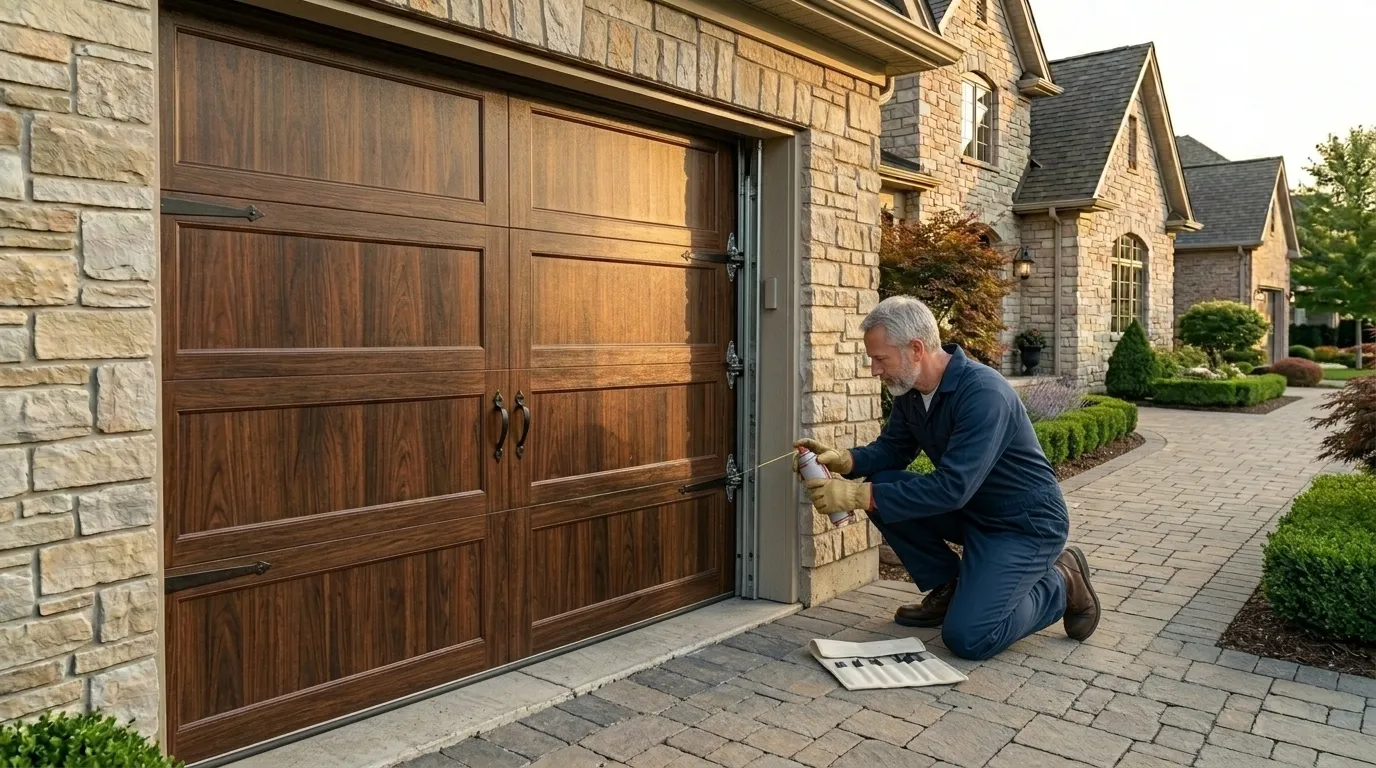
Bunkerville sits about four miles out from our Mesquite shop, close enough that a maintenance visit doesn't turn into a half-day trip, but far enough that we plan the truck load before we leave rather than turning around for a part. That matters here because the houses aren't the same age as the ones we see closer to town. Median build year in this area runs around 1991, a decade or more older than the mostly-2000s stock nearer Mesquite. Doors from that era often carry the original torsion springs and steel rollers, hardware nobody's touched since it went up. On top of the age, this stretch of the valley sits in a severe-heat climate band. Heat doesn't just wear rubber and paint - it cooks the grease out of a spring coil and a roller bearing years before the metal itself gives out. So a maintenance call here is less about checking for damage and more about catching hardware that's aged quietly under a heat load most manufacturers didn't design for. We're not guessing at a generic tune-up list. We're looking at a specific decade of hardware sitting in a specific climate, and that combination is what decides what actually needs attention.
We don't quote a response time for Bunkerville - the truck comes from Mesquite, and we're honest that a call here gets scheduled around that drive rather than treated as a walk-up job. The distance itself is short, four miles, so it rarely changes the day we can get out, but it does change how we prep. Because the hardware in this area skews older, a maintenance visit here often runs a bit longer on-site than the same service closer to Mesquite, simply because there's more to inspect on a 1991-era door than on a door built in the 2000s. We'd rather spend an extra fifteen minutes checking a spring coil that's due for replacement soon than sign off on a tune-up that misses it. If a part turns out to need ordering, that's a second trip - we don't carry every spring size for hardware this old on every run, and we won't pretend otherwise.
The truck carries the maintenance basics that cover most doors regardless of age: lubricant rated for high-heat service, replacement rollers, hinge pins, and cable clips. For a neighborhood built mostly around 1991, we also check stock for the torsion spring sizes and end bearing plates common to that decade before we head out, since that hardware doesn't always match what's standard on newer doors closer to Mesquite. What we don't carry on every truck is a full run of specialty springs for every door size and weight - some older doors were built with hardware that's since been discontinued, and matching it can mean a short-order wait. We'll tell you upfront if that's the case rather than force a fit that won't hold up under this area's heat load.
There's real maintenance an owner can do here without a call: wiping down and lubricating rollers and hinges every few months, checking that the track is free of dust and grit, and watching for a door that starts closing unevenly - all worth doing given how hard the heat here is on grease and metal. What you shouldn't touch is spring tension. A torsion spring on a door this age is under real load, and adjusting or replacing it without the right bars and clamps is how people get hurt. If a door built around 1991 is sagging on one side or the opener strains to lift it, that's a hardware fatigue issue, not a lubrication fix, and it's worth a call rather than a workaround.
The complaint we hear most from this stretch is a door that used to close quietly and now grinds, hesitates, or reverses partway down. In a house built around 1991, that's usually not the opener - it's grease that's baked hard inside the roller bearings or spring coil after years in a severe-heat climate, adding friction the motor wasn't sized to fight. A second version of the same problem shows up as a door that closes fine in the evening but sticks in the afternoon, when the metal's hottest and the hardened lubricant is least forgiving. Either way, it's aging hardware losing the fight against heat, not a sudden break.
We start with the springs, since that's where a 1991-era door under heat stress shows fatigue first - checking coil gap, listening for the tone when they're tested, and looking for the flat spots that mean a spring is near the end of its life. From there we strip and replace the hardened grease on rollers and hinges with lubricant built to hold up under this area's heat rather than break down by August, check cable fray at the drum, and true up track alignment that heat-cycling can knock out of square over the years. Because we're driving out from Mesquite, we do all of it in one visit when the parts on hand cover it, which for most doors of this age and stock they do.
Given the severe-heat band this area sits in, once a year is worth doing at minimum - heat ages lubricant and hardware faster than it does in a milder climate, and a yearly check catches a fatigued spring or dried-out roller before it fails outright rather than after.
It's a short drive, about four miles, so it rarely changes when we can get out. What it does affect is prep - since houses here run older on average, we plan the truck load for that hardware before leaving rather than turning back for a part.
Grease inside rollers and spring coils hardens over years of severe summer heat, and it's least forgiving when the metal's hottest. If a door built around 1991 hesitates or grinds more in the afternoon than in the morning, that's usually the cause, not a motor problem.
Call now or request a free quote - same-day service on most repairs, upfront written pricing.